Chesham sits along the River Chess, and its housing reflects that layout: older terraces and cottages packed into the valley floor around the town centre and the old market square, with later Victorian and Edwardian streets on the rise, and postwar and modern estates climbing the hillsides on both sides of town towards Ashley Green and Lye Green.
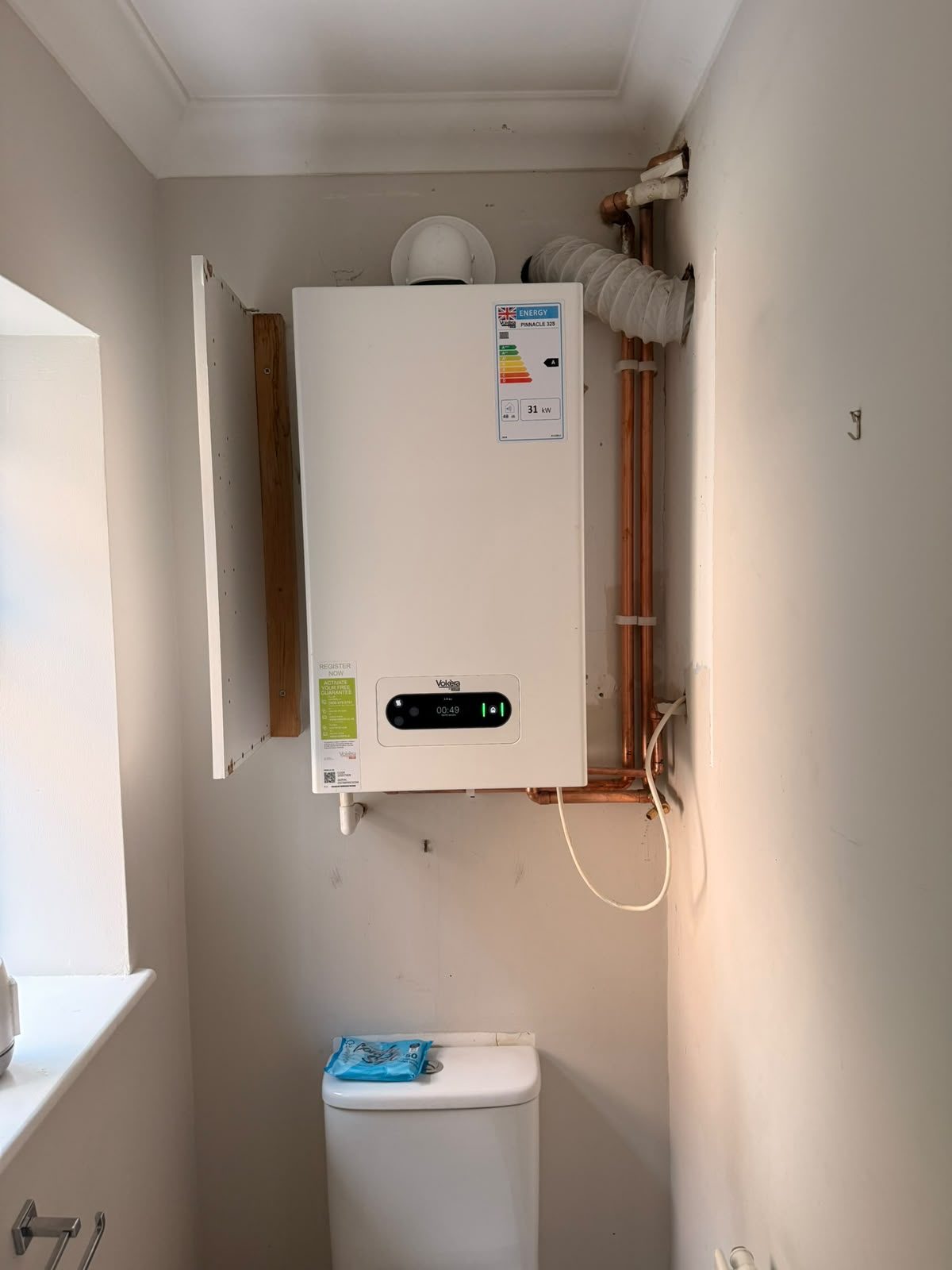
The older terraces in the valley, many built close together with shared party walls, often have compact plumbing runs and boilers tucked into small kitchens or cupboards under the stairs. Space is tight, so replacing a boiler here is as much about fitting a unit that suits the space as it is about output; a badly chosen boiler can leave awkward pipework crammed into a cupboard that was never designed for it.
Climbing out of the valley, the hillside estates are a mix of 1960s-80s housing and newer infill, generally with more room around the boiler but their own issue: gravity and pressure. Houses built up a slope sometimes have unusual pipe runs between floors, and older gravity-fed heating systems on a hillside plot can behave differently to the same system on flat ground, particularly with air locks and circulation.
Chesham is on the end of the Metropolitan line, which has kept it a popular commuter town while retaining a fairly independent, market-town feel around the High Street. That independence shows in the housing too: plenty of extended and adapted properties rather than uniform new-build estates, which means every heating system has usually been added to at least once over the years.
Like the rest of the Chilterns, Chesham's water is hard, drawn from the same chalk aquifer as High Wycombe and Amersham. Scale is a steady issue in boilers and cylinders across the whole town, valley and hillside alike, and it's usually the quiet cause behind a boiler that's started running noisier or less efficiently than it used to.