
Gas Safe Reg. 975777
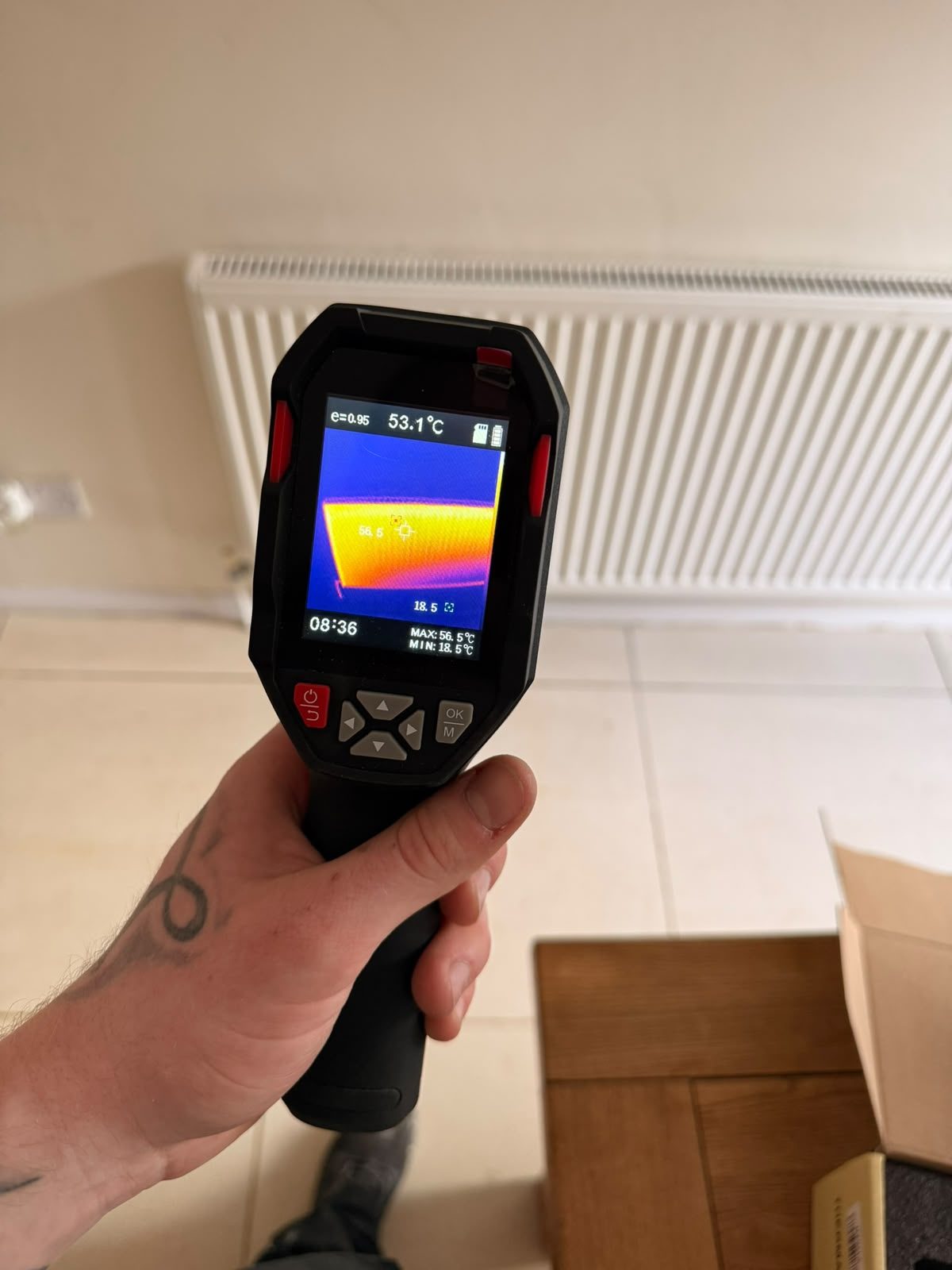
Engineer using a thermal imaging camera to survey a radiator and pipework while tracing a hidden leak

High Wycombe & Buckinghamshire · Gas Safe 975777

Hidden Leak Detection& Repair AcrossHigh Wycombe

Damp patch on a ceiling, boiler pressure that will not hold, or a water bill that has climbed for no reason: the leak is traced to a location before anything gets lifted, then repaired on a price agreed in advance and guaranteed for a year.

24/7 line answered by the engineer · Gas Safe 975777 · £2 million public liability

Recent Leak Detection & Repair Jobs

Photographs from our own work

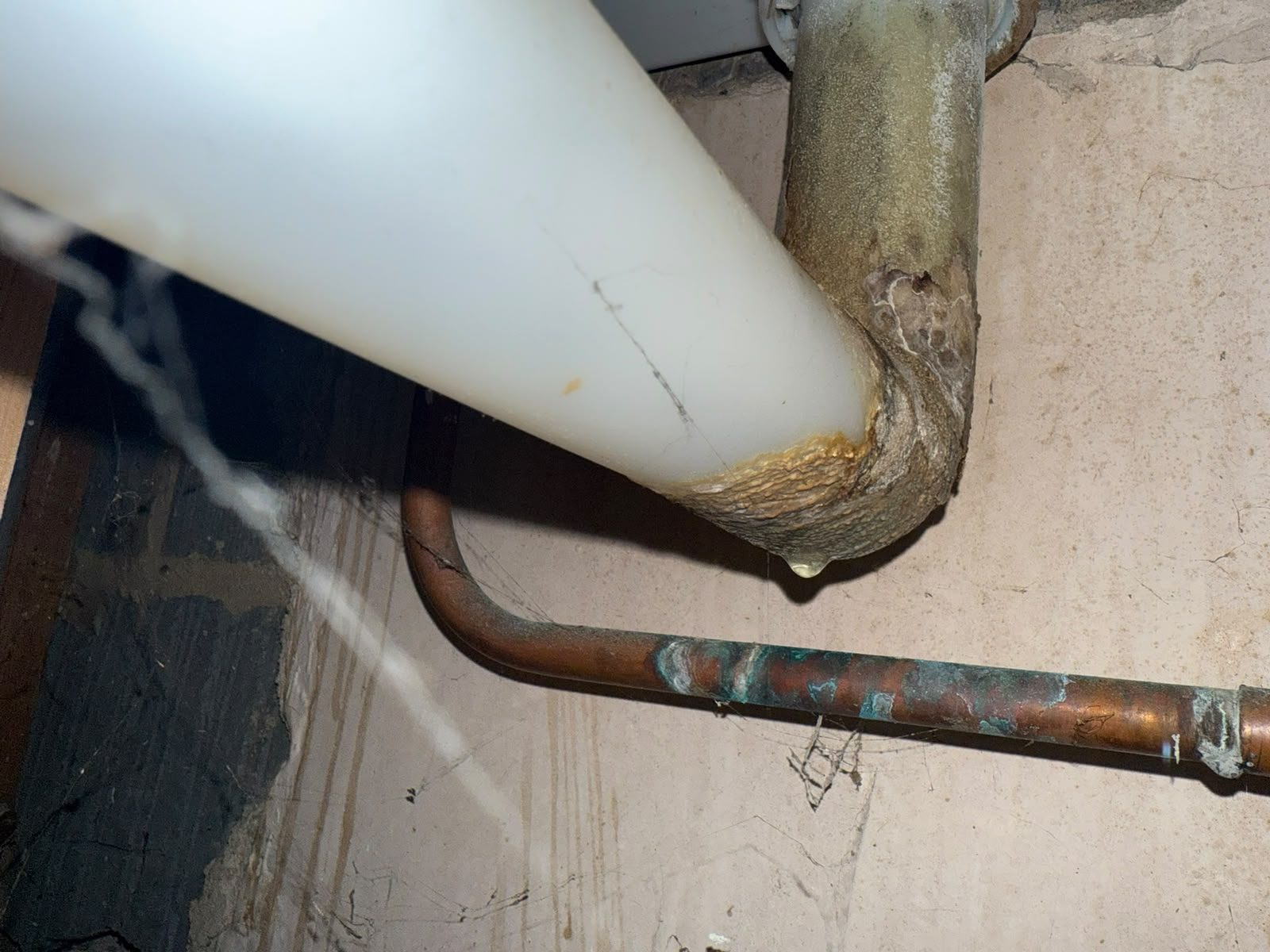
Corroded waste pipe joint dripping water, found and traced during a leak detection call-out

The Service

Finding the leak before breaking anything open

Most water leaks in a house are not visible at the point they are leaking. They appear as a stain two rooms away, a musty smell in a cupboard, a warm patch on the floor, boiler pressure that drops every few days, or a water meter that keeps turning with every tap in the house closed.

The job is to narrow the location down before any floorboard comes up or any tile comes off. That means systematic isolation: shutting off sections and watching what happens to pressure and meter movement, plus pressure testing, checking heating circuits separately from the mains, and following the physical evidence back to a source rather than out from a stain.

Leaks fall into a few groups: mains supply pipework, hot and cold distribution inside the property, heating circuits and buried pipework under floors, waste and soil pipework, and shower or bath sealing that only leaks when in use. Each behaves differently, and telling them apart is most of the diagnosis.

Once found, the repair is quoted before it happens. Where a floor or wall does need opening, you know exactly what and why before we start.

Boiler pressure keeps dropping
Either water is escaping from the heating circuit or the expansion vessel has failed. Both are traceable.
Damp patch, stain or musty smell
Ceiling, wall or cupboard. Water travels along joists, so where it shows is rarely where it starts.
Water bill has jumped for no reason
On a metered supply, an underground or under-floor leak can run for months before anything becomes visible.
A warm spot on the floor
Often a leaking heating pipe under screed. Worth acting on quickly before the floor finish is affected.

What Happens If It Waits

Hidden leaks are slow, and slow is what makes them expensive

A dramatic burst gets fixed within the hour because nobody can ignore it. A hidden leak releases a small volume continuously, sometimes for months, into places nobody looks: under a bath, beneath a screed, inside a stud wall, along a joist void. The total volume ends up far higher and the damage far deeper.

Persistent moisture in a structure means saturated insulation that stops insulating, plasterboard that softens and crumbles, and timber that stays wet long enough to rot. Mould follows, and once mould is in a cavity it is a remediation job rather than a wipe-down.

Heating leaks add a second layer. A circuit that keeps losing pressure is repeatedly topped up with fresh oxygenated mains water, which accelerates corrosion in every radiator on the system. So the leak is not only damaging the building, it is quietly destroying the heating.

There is a financial timer as well. Insurers generally cover sudden escape of water but take a much dimmer view of gradual damage that has been developing over a long period. Acting on the first symptoms keeps you on the right side of that distinction and keeps the repair small.

Common mistakes we get called out to fix

  • Topping up the boiler and carrying on

    Weekly repressurising masks an active leak while pumping fresh oxygenated water into the system every time.

  • Redecorating over a damp stain

    Fresh paint over a wet ceiling hides the evidence for a few weeks. The water has not gone anywhere.

  • Lifting floors to look, without testing first

    Speculative excavation costs money and rarely finds it. Isolation and pressure testing narrow the area down first.

  • Assuming the stain marks the leak

    Water runs along joists, pipes and cable routes and drops at the first low point, often several metres from the source.

  • Waiting to see if it gets worse

    It will, and the delay is exactly the period an insurer will describe as gradual damage.

Our Process

A fixed sequence, every job,so nothing gets guessed at

  1. 01

    Inspection

    Symptoms, timing and location recorded, meter and system pressure checked, and the affected area examined before anything is opened.

  2. 02

    Isolation testing

    Sections are isolated in sequence: mains, hot, cold and heating, to establish which circuit is losing water.

  3. 03

    Locate the source

    Pressure testing and systematic elimination narrow the leak to a specific run, so access is targeted rather than speculative.

  4. 04

    Repair on a fixed price

    The repair is quoted before it starts. Pipework is cut out and remade properly, then the section is pressure-tested.

  5. 05

    Verify & guarantee

    System refilled, inhibited where it is a heating circuit, pressure held and rechecked, and the work guaranteed for a year.

What You Actually Get

The difference between a fixand a job that stays fixed

Targeted access, less making good
Locating before lifting means one opening in the right place instead of three in the wrong ones, which is where the real saving sits.
The cause identified, not just the symptom
You get told why the pipe failed: corrosion, freezing, a poor joint or movement, so the same thing does not recur nearby.
Heating and plumbing under one engineer
Whether the leak is on the mains, the hot water or the heating circuit, the same Gas Safe registered engineer handles it.
Evidence for your insurer
Clear reporting of what was found and what was done supports an escape-of-water claim, and acting early keeps you clear of gradual-damage arguments.
Available around the clock
An active leak does not wait for office hours. The 24-hour line is answered first time by the engineer.
Fixed pricing and a year's guarantee
Free quotes, fixed pricing on most jobs, and every repair covered by our one-year workmanship guarantee.

In Detail

Leak types, locations and how each is traced

Different leaks announce themselves in different ways. Recognising the pattern is what makes the search efficient rather than destructive.

Heating circuit leaks and pressure loss

A sealed heating system that loses pressure is either leaking or has a failed expansion vessel. Testing the vessel's charge separates the two immediately, which saves searching for a leak that does not exist.

Where it is a genuine leak, the usual suspects are radiator valve tails, weeping automatic air vents, the pressure relief valve discharging outside unnoticed, and buried pipework under floors. The relief valve is worth checking first: a slow discharge to an outside pipe explains a great many mysterious pressure drops.

Buried heating pipework under screed can be isolated circuit by circuit and pressure-tested to identify the affected run before any floor is disturbed.

Mains supply and underground leaks

A meter that continues to register with every internal outlet closed points to a leak on the supply, which may be inside the property boundary or on the incoming service pipe underground.

Old lead and early plastic service pipes are common failure points on older Buckinghamshire properties. Where the leak is on your side of the boundary it is your responsibility, and we will tell you clearly where the boundary lies before any work is quoted.

Internally, mains leaks tend to show as damp at low level, a persistently wet patch on a floor, or unexplained water in a service void.

Bathroom leaks that only appear in use

A leak that appears after a shower and not otherwise is usually not a pipe at all: it is failed sealant, a cracked shower tray, a leaking waste connection or grout that has let water through to an untanked substrate.

These are diagnosed by controlled testing: running the shower without the waste in use, filling and holding the bath, and testing the waste independently. That sequence identifies which of the three it is without opening anything up.

Repairs range from resealing and replacing a trap to reworking the wet area properly where the tanking has failed. Where it is the latter, we say so: resealing over a failed substrate buys a few months at most.

Waste, soil pipework and ceiling stains

Waste leaks are intermittent by nature, only releasing water when the fitting above is used, which is why they can take a long time to be noticed and why they stain a ceiling in gradual rings.

Push-fit waste connections that have been disturbed, compression joints that have loosened with movement, and soil pipe seals that have perished are the common causes. Each is a straightforward repair once located.

Ceiling stains are mapped against the fittings above and the joist direction, because water tracks along the timber and drops at a fixing or a light fitting rather than directly beneath the fault.

Questions

Straight answersbefore you book

Anything not covered here, ring 07833 203288 and ask. You will speak to the engineer who would be doing the work, and a straight answer costs nothing.

07833 203288
How much does leak detection cost?+

Quotes are free, and where the job can be fixed-priced before starting it is. Where the extent of investigation cannot be known in advance, a £100 call-out fee applies and is explained to you before we attend.

How long does it take to find a leak?+

Many leaks are located within a single visit through isolation and pressure testing. Leaks under solid floors or in inaccessible voids can take longer, and you are kept informed rather than left waiting on a bill.

Will you have to lift my floors or break into walls?+

Only where the testing points to that specific location, and only after we have discussed it with you. The whole purpose of locating first is to keep access to a single targeted opening.

Why does my boiler pressure keep dropping?+

Either the heating circuit is losing water somewhere, or the expansion vessel has lost its charge. Both are testable and we check the vessel first, because it is the quicker of the two to rule out.

Will my insurance cover a hidden leak?+

Policies commonly cover sudden escape of water and the resulting damage, but often exclude damage that has developed gradually over a long period. Acting quickly and having the work documented gives you the strongest position, though your policy terms decide it.

Is a hidden leak an emergency?+

If water is actively running or coming through a ceiling, yes: ring 07833 203288, the line runs 24 hours a day. A slow pressure drop is urgent rather than an emergency, but the sooner it is traced the smaller the repair.

Can you repair the leak once it is found?+

Yes. We locate and repair, so there is no second trade to arrange. The repair is quoted before it starts and pressure-tested afterwards.

How can I tell if I have a hidden leak?+

Check your water meter with every outlet closed; if it moves, water is going somewhere. Other signs are damp or musty smells, unexplained warm patches on floors, staining that returns after decorating, and heating pressure that will not hold.

Is the repair guaranteed?+

Yes: our one-year workmanship guarantee covers the repair, and we carry £2 million public liability insurance.

Which areas do you cover?+

High Wycombe, Amersham, Chesham, Beaconsfield, Marlow, Aylesbury, Princes Risborough, Gerrards Cross, Maidenhead and the villages between them.

Find the leak before it finds your floors

Traced by testing rather than guesswork, repaired on a price agreed in advance, and covered by our one-year workmanship guarantee. Free quote, 24-hour line.

Gas Safe Registered 975777 · £2 million public liability · 1-year workmanship guarantee

Call NowFree Quote