
Gas Safe Reg. 975777
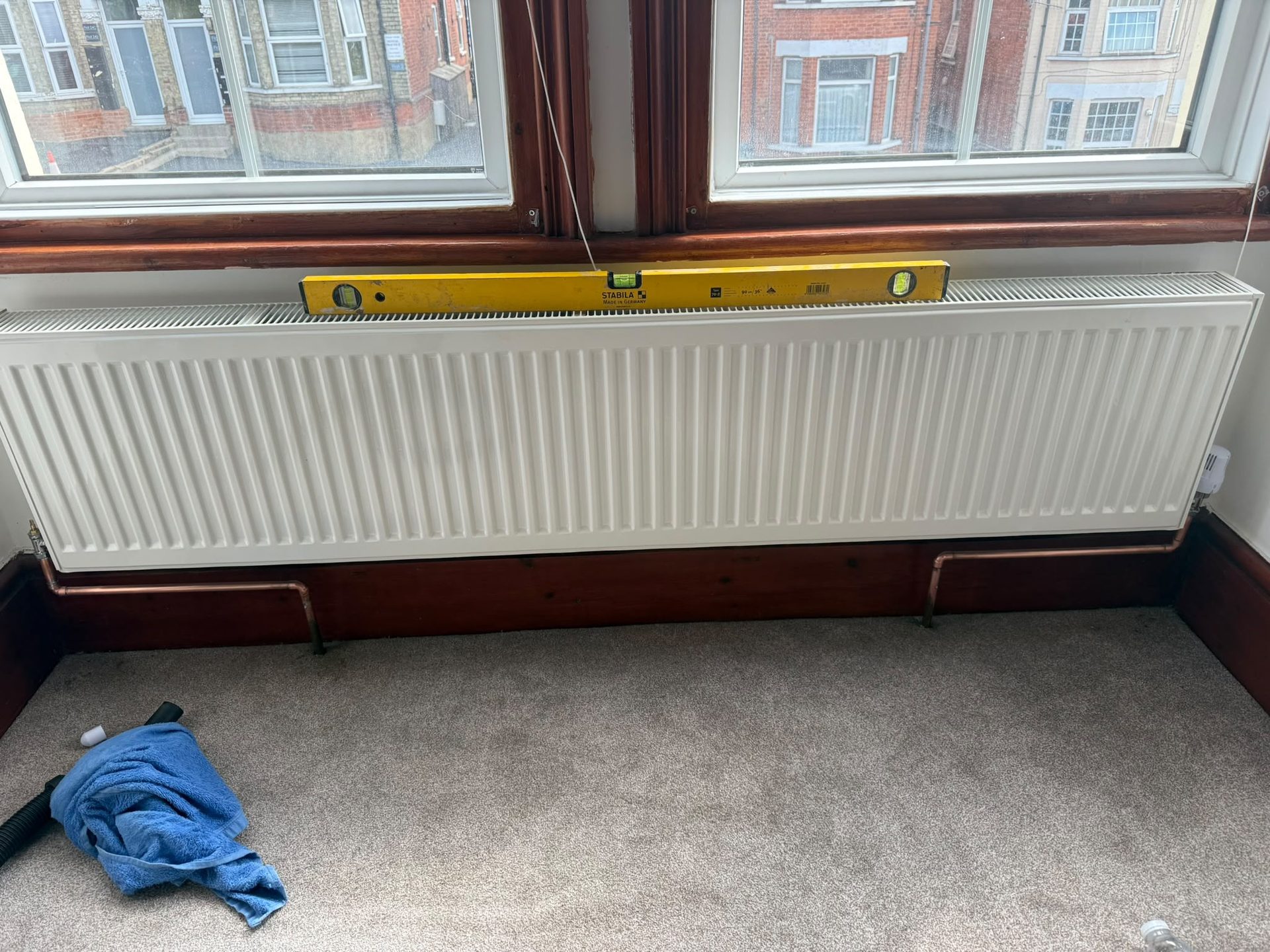
New white panel radiator fitted under a window and levelled during installation

High Wycombe & Buckinghamshire · Gas Safe 975777

Radiator Installation,Repairs & Upgrades inHigh Wycombe

Rooms that reach temperature and stay there: radiators sized to the actual heat loss, fitted neatly, fed by valves that work, and balanced across the whole system before we leave. Free fixed quotes and a one-year workmanship guarantee.

"Competitive quote to install 3 radiators… done with distinction" - Google review

Recent Radiator Installation & Repairs Jobs

Photographs from our own work

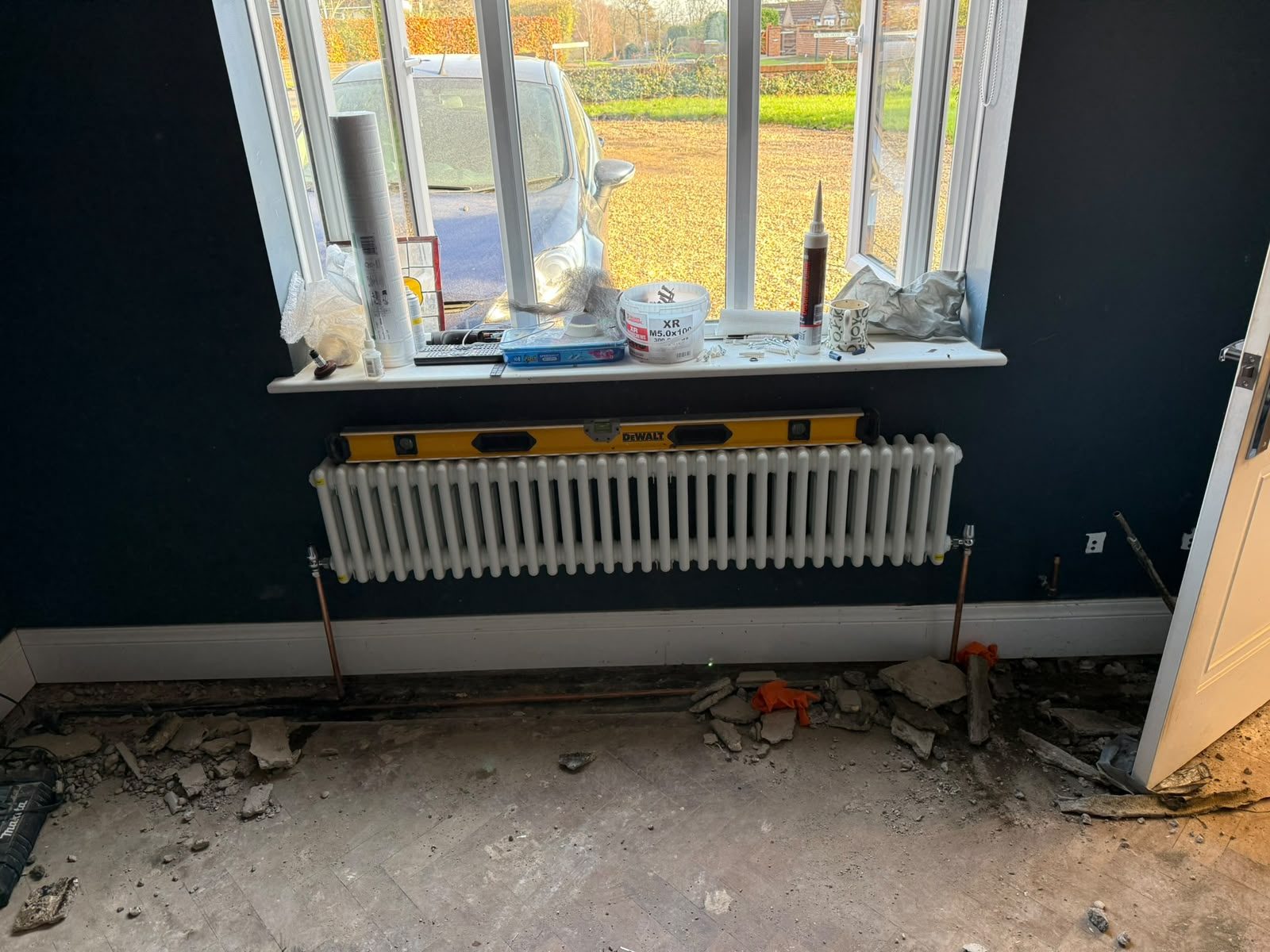
Traditional column radiator being installed in a room undergoing renovation

The Service

Radiators that actually heat the room they are in

Radiator work splits into three jobs: replacing tired or leaking radiators, adding or relocating them when a room changes use or an extension goes on, and repairing the ones that never get properly hot. All three are routine for us, and all three start with a heat-loss calculation rather than a guess at size.

Sizing is where most radiator disappointment begins. A radiator is rated in watts at a specific flow temperature, and that output has to match the room's heat loss: its volume, its external walls, its glazing and its insulation. Fit something too small and the room never reaches temperature no matter how long the boiler runs.

Thermostatic radiator valve upgrades are one of the cheapest heating improvements available. They let each room hold its own temperature so you stop heating spare bedrooms and hallways to the same level as the living room, and they pay for themselves through a couple of winters.

Every radiator job finishes with the system rebalanced: flow set at each lockshield so the near radiators do not steal the circulation from the far ones, and topped up with corrosion inhibitor.

Cold at the bottom, warm at the top
Sludge has settled inside the radiator. It needs flushing or replacing, and the system water dealing with.
Cold at the top, warm at the bottom
Trapped air. Easy to bleed, but if it keeps returning something is drawing air in and that needs finding.
Adding, moving or removing a radiator
Extensions, loft conversions, kitchen refits and rooms changing use all need the heating layout revisiting.
Old radiators leaking or looking tired
Pinholed steel and weeping valve tails are a leak in progress. Replacement is usually a half-day job.

What Happens If It Waits

A cold radiator is a system telling you something

When a radiator is hot at the top and cold along the bottom, magnetite sludge has settled inside it. That same sludge is circulating through the pump and the boiler heat exchanger, and it will keep accumulating until the water is cleaned. Replacing just the radiator without addressing the water simply hands the problem to the new one.

Repeated air is the other warning. If you are bleeding radiators every few weeks, air is being generated or drawn in: corrosion producing hydrogen, an automatic air vent letting air back, or a leak pulling it in on the negative side of the pump. Bleeding alone treats the symptom while the cause carries on.

Leaking radiators are more urgent than they look. A weeping valve tail drips slowly onto floorboards or carpet for months, staining, rotting and eventually rusting through the radiator itself. Pinhole corrosion in steel panels is progressive: once one appears, more follow.

There is a comfort cost too. Households with a cold room routinely raise the whole-house thermostat to compensate, which means every other room is overheated and the gas bill rises to fix one radiator's worth of problem.

Common mistakes we get called out to fix

  • Replacing like-for-like without sizing

    The old radiator may always have been undersized, especially after new glazing, an extension or a change of room use.

  • Opening every lockshield fully

    That is not balancing. It sends flow to the path of least resistance and starves the far end of the system.

  • Fitting a TRV on the wrong side

    Valve orientation matters. Fitted against the flow, some valves chatter or fail to regulate properly.

  • Refilling without inhibitor

    Every drain-down loses corrosion protection. Refilling untreated restarts the sludge cycle from day one.

  • Boxing radiators in behind full covers

    A solid cover can cut useful output significantly. If concealment is needed, the radiator has to be sized for it.

Our Process

A fixed sequence, every job,so nothing gets guessed at

  1. 01

    Inspection

    We check each radiator's heat pattern, the valves, the pipework layout and the room itself before deciding anything.

  2. 02

    Diagnosis & sizing

    Heat loss is calculated for the room and the fault identified: sludge, air, valve failure or simply an undersized panel.

  3. 03

    Fixed quote

    Radiators, valves and labour priced in writing before work starts. Quotes are free and nothing begins until you agree.

  4. 04

    Fit & flush

    Radiator removed, pipework adjusted, new unit hung level and fed with correctly oriented valves, floors protected throughout.

  5. 05

    Balance & guarantee

    System refilled, inhibited, purged and balanced radiator by radiator, then covered by the one-year workmanship guarantee.

What You Actually Get

The difference between a fixand a job that stays fixed

Rooms reach temperature quickly
Correct sizing and correct balancing mean the room heats in a reasonable time instead of trickling up all evening.
Lower bills through room-by-room control
Thermostatic valves stop unused rooms being heated to living-room temperature, which is where the waste normally sits.
Neat, level, properly supported fitting
Brackets set correctly, pipe tails cut cleanly, valves aligned. The finish is part of the job, not an afterthought.
Whole-system balance included
Balancing is done at the end of every radiator job as standard: most of the reason people notice the difference.
Protection against the next sludge cycle
Inhibitor is dosed on refill and we will tell you honestly if a filter or a flush would protect the work you have just paid for.
Fixed price, guaranteed work
Free quotes, fixed pricing on most jobs and a one-year workmanship guarantee on the installation.

In Detail

Radiator types, valves and installation detail

The right radiator depends on the room's heat requirement, the space on the wall and how the room is used. Here is what the options actually mean in practice.

Panel radiators: types 11, 21 and 22

Type 11 is a single panel with a single convector fin set: slim, lower output, useful where wall depth is tight. Type 21 adds a second panel, and type 22 uses two panels and two fin sets to deliver considerably more heat from the same wall width.

Choosing between them is a trade-off between projection from the wall and output. In a small hallway a type 11 may be all that fits; in a through-lounge with large glazing a type 22 is often the only way to meet the heat loss without covering the wall.

Outputs are quoted at standard flow temperatures. Systems running cooler flow temperatures for efficiency need larger radiators to deliver the same heat, which is worth knowing before choosing on looks alone.

Column, vertical and towel radiators

Column radiators suit period properties in Wycombe, Marlow and Amersham where a modern panel would look wrong. They hold more water, so they warm more slowly but hold heat longer.

Vertical radiators are the answer where wall space is limited: narrow kitchens, hallways and rooms with full-height glazing, and give good output from a small footprint.

Heated towel rails are standard in bathrooms, but they typically deliver less heat than the panel they replace. In a cold bathroom the sensible answer is a towel rail plus a small panel or underfloor heating, and we will say so at quote stage rather than after you have noticed.

Valves: TRVs, lockshields and manual

A thermostatic radiator valve regulates flow according to room temperature and is the standard fitting on all but one radiator on the system. That exception matters: the room containing the main thermostat should not have a TRV fighting it.

The lockshield on the opposite end sets the flow rate for balancing. It is deliberately not a user control, and setting it correctly is what makes the difference between an even system and one where the far bedroom never warms.

Angled, straight and corner valves are chosen to suit the pipe entry. Where valves have seized or the tails have corroded, replacement at the same time as the radiator saves a second visit and a second drain-down.

Relocations, extensions and pipework

Moving a radiator means new pipework, and how that is routed depends on the floor construction. Suspended timber floors allow runs between joists; solid concrete floors usually mean surface routing, skirting-level pipework or a route through an adjacent room.

Extensions and loft conversions add heat load. Before extending the system we check the boiler output and the existing pipework can carry it: adding four radiators to a system already at capacity leaves the whole house lukewarm.

Removing a radiator permanently is not simply capping the tails. The remaining system needs rebalancing afterwards, otherwise the flow redistributes and rooms that were fine start behaving differently.

Questions

Straight answersbefore you book

Anything not covered here, ring 07833 203288 and ask. You will speak to the engineer who would be doing the work, and a straight answer costs nothing.

07833 203288
How much does it cost to fit a new radiator?+

It depends on the radiator size, the valves and whether the pipework already exists in the right place. Quotes are free and fixed before work starts, so you get a single figure covering radiator, valves and labour rather than an estimate that grows.

How long does a radiator replacement take?+

A straight swap where the pipework stays put is typically an hour or two. A relocation or a new radiator on new pipework is usually a half to full day depending on floor access.

Why is my radiator cold at the bottom?+

Sludge has settled inside it. The radiator can sometimes be flushed, but the underlying issue is system water quality, which is why we usually recommend addressing the whole system rather than treating one panel.

Can you add a radiator to my existing heating system?+

Usually yes, provided the boiler output and pipework can take the additional load. We check that before quoting so the new radiator does not come at the expense of the rest of the house.

Are thermostatic valves worth fitting?+

For most households, yes. They let you hold different temperatures in different rooms and stop you heating unused space, and they are one of the lowest-cost improvements available on an existing system.

How long do radiators last?+

Steel panel radiators commonly last twenty years or more on a system with clean, inhibited water and a filter. On a neglected, sludged system they corrode from the inside and fail far sooner.

Do you balance the system afterwards?+

Yes, as standard on every radiator job. Balancing is what makes the far end of the house heat at the same rate as the near end, and it is skipped surprisingly often elsewhere.

Is a leaking radiator an emergency?+

If it is dripping steadily onto flooring, treat it as urgent. Our line runs 24 hours a day: ring 07833 203288 and we will talk you through isolating the valves in the meantime.

Is radiator work guaranteed?+

Yes: one-year workmanship guarantee on every installation and repair, plus £2 million public liability insurance.

Which areas do you fit radiators in?+

High Wycombe, Amersham, Chesham, Beaconsfield, Marlow, Aylesbury, Princes Risborough, Gerrards Cross, Maidenhead and the surrounding villages.

Get every room heating properly

New radiators, relocations, valve upgrades or a stubborn cold panel: sized correctly, fitted neatly and balanced before we leave. Free fixed quote, one-year guarantee.

Gas Safe Registered 975777 · £2 million public liability · 1-year workmanship guarantee

Call NowFree Quote