
How the flush is actually done
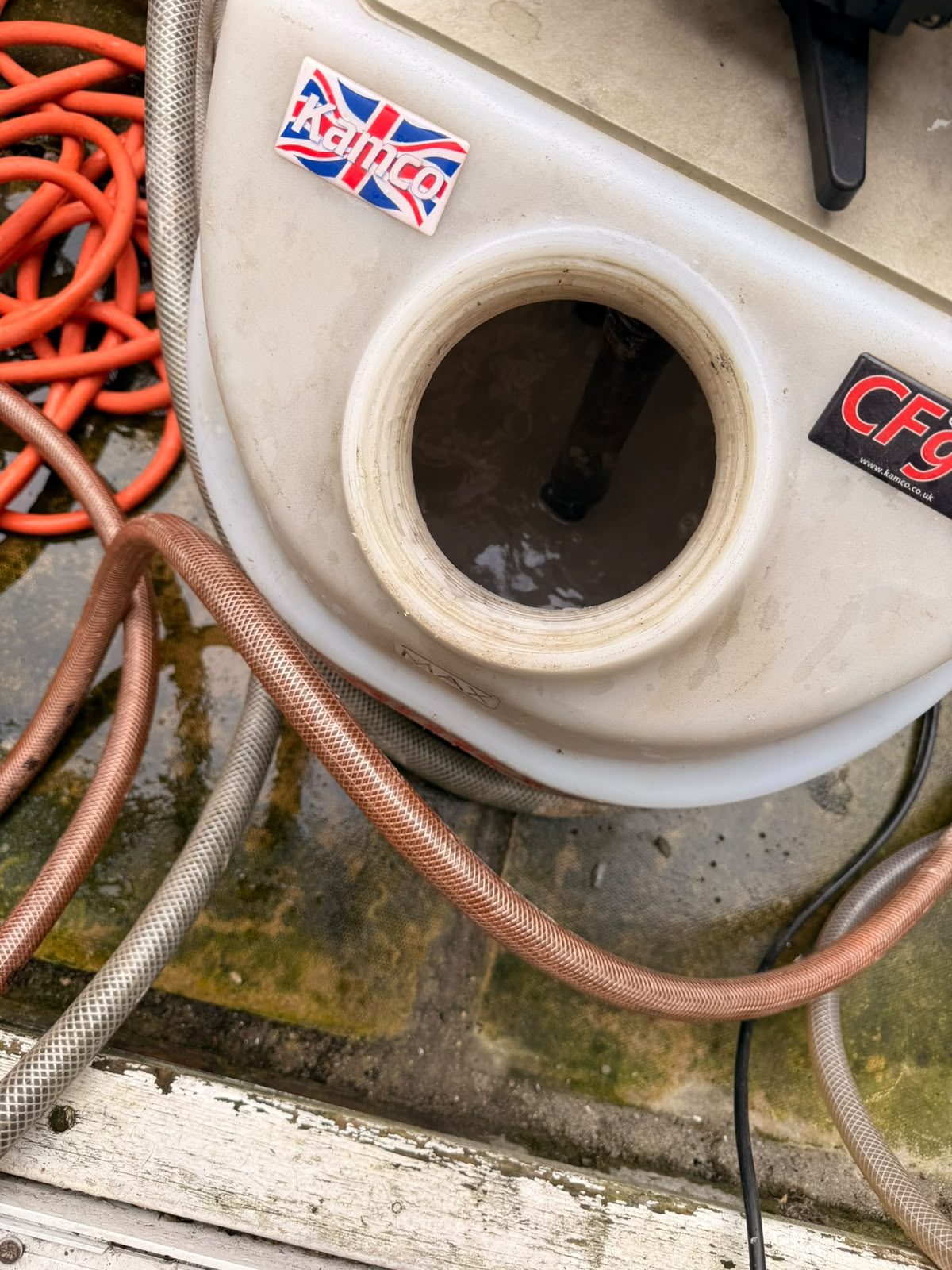
A flushing unit is connected into the system, usually at the pump or across a radiator's valve tails, and high-velocity flow is driven through the pipework in alternating directions. Reversing the flow is what dislodges deposits that a normal circulation direction simply passes over.
Radiators are treated one at a time: isolated, agitated where necessary, and flushed individually so the debris in each is lifted and carried away rather than pushed into the next panel along.
Chemical cleanser is circulated first to break down magnetite, scale and any residual flux, followed by a neutraliser and a thorough clean-water flush until the discharge runs clear. The job is finished on a measurement, not a hunch.