
Gas Safe Reg. 975777
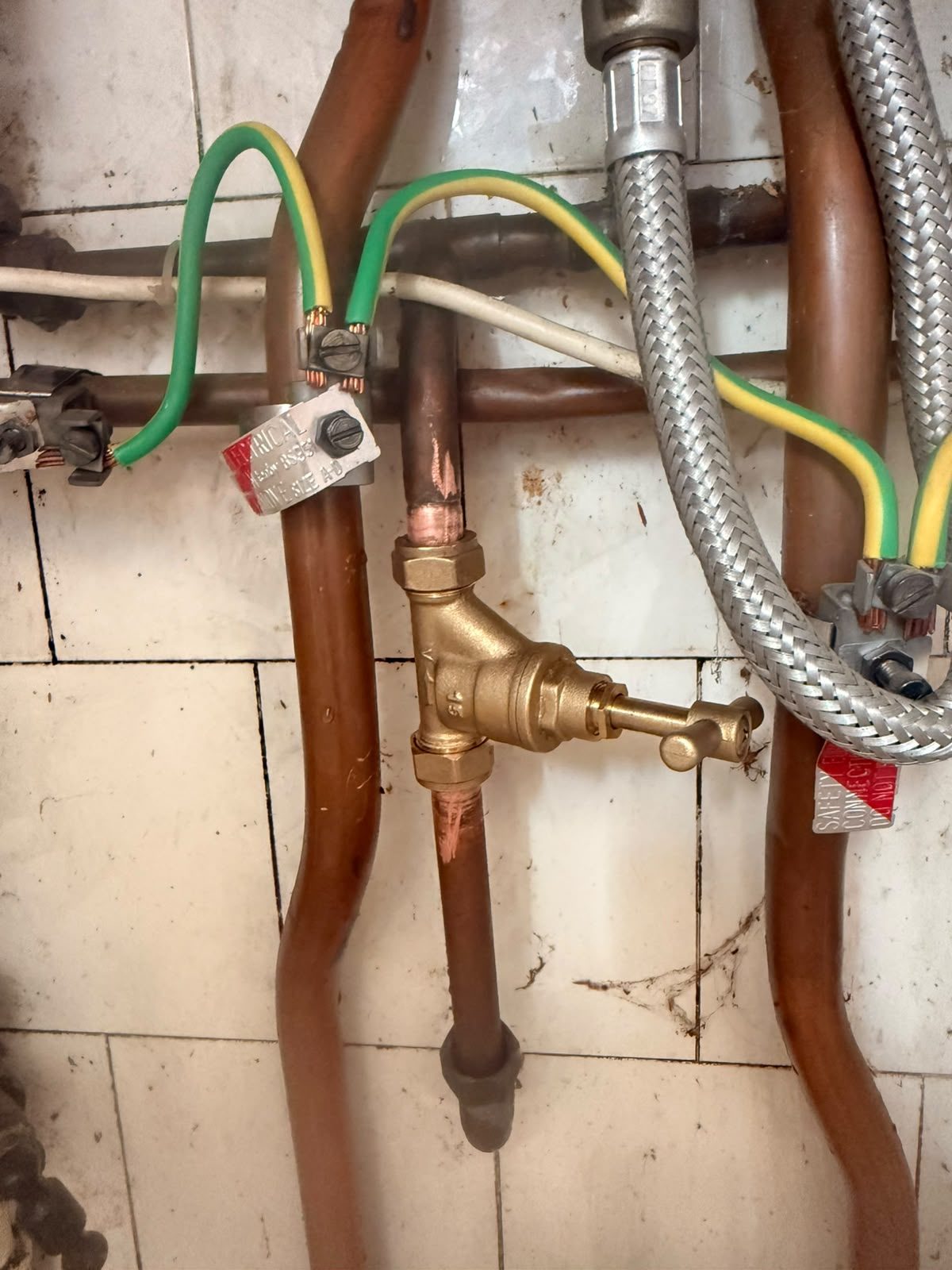
Central heating drain-off valve and copper pipework fitted during a heating system installation

High Wycombe & Buckinghamshire · Gas Safe 975777

Central Heating Repairs& System Installations inHigh Wycombe

Every room warm, quiet pipework and a system that holds its pressure: diagnosed at the cause rather than patched at the symptom, priced up front, and guaranteed for a year. Gas Safe registered engineer, registration 975777.

4.9★ on Google · Free fixed quotes · Family-run, engineer-owned

Recent Central Heating Repairs & Installations Jobs

Photographs from our own work

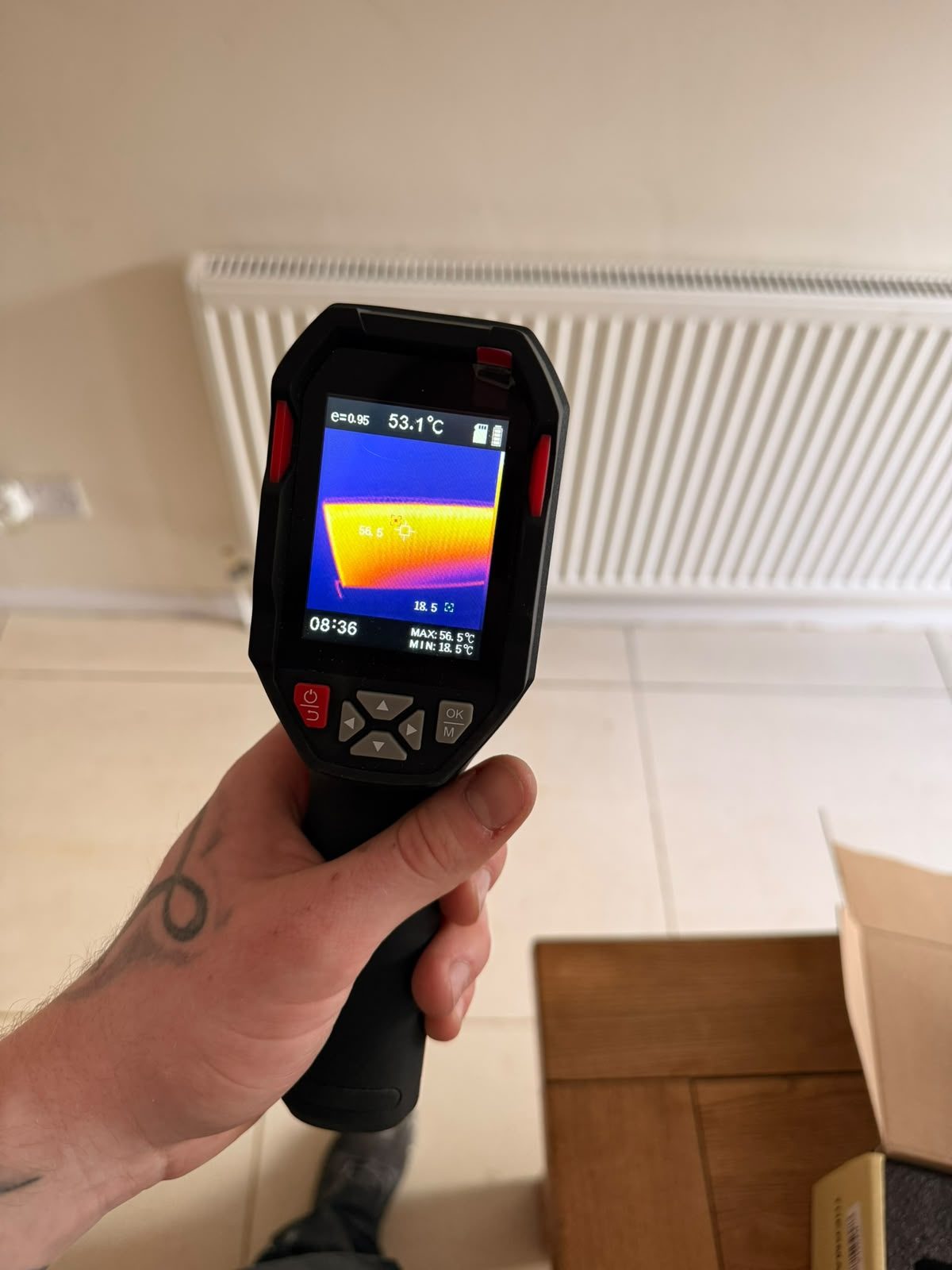
Thermal imaging camera reading a radiator surface temperature while balancing and testing a central heating system

The Service

Heating that works in every room, not just the ones near the boiler

Central heating is a system, and most heating complaints are system problems rather than boiler problems. Cold rooms at the far end of the run, radiators hot at the top and cold at the bottom, pipework that ticks and bangs, pressure that drops every week; these are circulation, balance and water-quality faults, and swapping the boiler will not fix any of them.

We work on the whole system. That means diagnosing flow and return temperatures, checking pump performance and speed settings, testing motorised valves and thermostats, inspecting the expansion vessel and pressure relief arrangements, and assessing water quality for magnetite and inhibitor levels before recommending anything.

Where a system has reached the end of the road - leaking steel radiators, silted microbore, a boiler that has been repaired one time too many - we design and install the replacement properly. Heat loss is calculated room by room, radiators are sized to that figure rather than to what was there before, and the pipework is set out so the system balances instead of fighting itself.

The same engineer quotes, installs and comes back if anything needs looking at, which is why the standard stays consistent from job to job.

Some rooms never get warm
Usually balancing, sludge or an undersized radiator rather than a boiler at fault, and all three are fixable.
Banging, ticking or gurgling pipework
Air, expansion noise or a pump running at the wrong speed. Noisy heating is telling you something.
Pressure keeps dropping
Water is escaping somewhere or the expansion vessel has failed. Both get traced properly, not topped up weekly.
You want smarter, cheaper control
Thermostatic valves, room and cylinder stats and zoning let you heat what you use and nothing else.

What Happens If It Waits

Ignore a struggling system and it takes the boiler with it

Central heating water goes black for a reason. Magnetite, corrosion sludge, builds up from the inside of steel radiators and circulates through the system. It settles in the bottom of radiators, blocks narrow microbore runs, coats the boiler heat exchanger and wears out the pump. Every month it is left, circulation gets worse and the boiler works harder to move less heat.

That extra work shows up on your gas bill first and on your repair bill second. A system full of debris makes the boiler cycle repeatedly, run hotter and fail earlier, and most manufacturer warranties can be challenged where system water quality has plainly been neglected.

Slow leaks are the other quiet expense. A system that needs repressurising every fortnight is losing treated, inhibited water and replacing it with fresh oxygenated mains water, which accelerates corrosion everywhere at once. Meanwhile the water is going somewhere, often into a floor void or under a screed, where it does damage you cannot see until the flooring lifts.

None of this arrives suddenly. A system deteriorates over years and the household adjusts to it, turning up the thermostat and closing doors to cold rooms, until a cold snap exposes what has actually been happening.

Common mistakes we get called out to fix

  • Bleeding radiators every few weeks

    Repeat air means it is being generated: usually corrosion or a leak drawing air in. Bleeding treats the symptom only.

  • Turning every TRV to maximum

    Fully open valves everywhere unbalances the system, so the nearest radiators take the flow and the far ones stay cool.

  • Adding radiators without recalculating

    Extra load on a boiler and pipework sized years earlier is why extensions so often heat badly.

  • Skipping inhibitor after draining down

    Any drain-down flushes out the corrosion inhibitor. Refilling without replacing it starts the sludge cycle again immediately.

  • Replacing the boiler and nothing else

    A new boiler on a dirty, unbalanced system inherits every existing problem and often blocks within months.

Our Process

A fixed sequence, every job,so nothing gets guessed at

  1. 01

    Inspection

    Every radiator, valve, thermostat and control is checked, along with system pressure, water quality and how the property is actually used.

  2. 02

    Diagnosis

    Flow and return temperatures measured, pump and valve operation tested, leaks and blockages traced to a specific location.

  3. 03

    Fixed quote

    Repair, upgrade or replacement priced in writing before work starts. Quotes are free and nothing proceeds without your say-so.

  4. 04

    Work carried out

    Repairs, radiator changes or a full installation completed by a Gas Safe registered engineer, with floors covered and the site kept tidy.

  5. 05

    Balance & guarantee

    System refilled, inhibited, balanced radiator by radiator, controls demonstrated, and everything backed by the one-year workmanship guarantee.

What You Actually Get

The difference between a fixand a job that stays fixed

Even heat across the whole house
Balancing is done properly at the end of every job, so the far bedroom warms at the same rate as the hallway.
Lower gas use from correct control
Thermostatic valves, zoning and accurate room control mean you heat occupied rooms to temperature and stop paying for the rest.
Quiet running
Correct pump speed, purged air and properly clipped pipework remove the banging and ticking that most people assume is normal.
Longer boiler life
Clean, inhibited, filtered system water is the single biggest factor in whether a boiler reaches twelve years or twelve months of trouble.
One accountable engineer
Josh and his dad do the work themselves: the person who quoted your system is the person who installs and returns to it.
Priced before it starts
Free quotes and fixed pricing on most jobs, with the £100 call-out fee explained up front on anything that cannot be quoted in advance.

In Detail

Systems, pipework and controls in detail

High Wycombe housing stock runs from Victorian terraces to 1990s estates and new-build extensions, and each generation of property brings its own heating characteristics. Here is what that means in practice.

System types and what suits your property

Sealed combi systems suit smaller properties with a single bathroom and mains pressure good enough to deliver a decent shower. They are simple, compact and lose nothing to cylinder standing heat, but they cannot serve two showers at once.

System boilers with an unvented cylinder are the usual answer for family houses with two or more bathrooms, giving mains-pressure hot water to every outlet simultaneously. Open-vented systems with a loft tank are still common in older Buckinghamshire homes and remain perfectly serviceable when maintained.

Choosing between them is about how your household actually uses hot water, not about what is fashionable. We calculate the demand and tell you which option genuinely fits.

Pipework: microbore, 15mm and barrier plastic

Microbore (8mm and 10mm) pipework was fitted widely in the 1970s and 80s. It works, but its narrow bore silts up quickly and a partially blocked microbore tail is one of the most common causes of a single stubbornly cold radiator.

Standard 15mm and 22mm copper remains the backbone of most installations, with barrier plastic used where runs are buried in floors or need flexibility. Whichever is used, joints are kept accessible where possible and buried sections are pressure-tested before anything is covered up.

On full installations, pipe routes are planned to keep index runs short and balanced. That planning is invisible once the floors are back down, and it is the difference between a system that balances easily and one that never quite does.

Controls, zoning and thermostatic valves

Modern controls do more for running costs than almost anything else. Thermostatic radiator valves set each room individually, a room thermostat governs the main zone, and a cylinder thermostat stops hot water being reheated needlessly.

Zoning splits upstairs from downstairs, or a home office from the rest of the house, so you are not heating empty rooms to warm one. On larger properties this is where the savings genuinely accumulate.

Smart and programmable thermostats can be fitted where you want them, and we will set them up and show you how they work rather than handing you a manual on the way out.

Water quality, filters and inhibitor

A magnetic filter fitted on the return catches circulating magnetite before it reaches the boiler, and it is cleaned at each service. On any system that has been running for years without one, it is one of the cheapest upgrades available.

Corrosion inhibitor is dosed after any drain-down and its concentration should be checked periodically, because it depletes. Systems with strong inhibitor levels and a filter simply do not sludge up at the rate untreated ones do.

Where a system is already heavily contaminated, a power flush clears it before new components go in; otherwise the debris simply migrates into whatever is newest and narrowest.

Questions

Straight answersbefore you book

Anything not covered here, ring 07833 203288 and ask. You will speak to the engineer who would be doing the work, and a straight answer costs nothing.

07833 203288
Why is one radiator always cold in High Wycombe's older houses?+

Nine times out of ten it is sludge sitting in the bottom of the radiator, a silted microbore tail, a stuck thermostatic valve pin, or a system that has never been balanced. We test which it is rather than guessing, then quote the specific fix.

How much does a central heating repair cost?+

Quotes are free and most repairs are fixed-priced before work begins. Where a fixed quote is not possible up front, a £100 call-out fee applies and you are told before we attend.

How long does a full central heating installation take?+

A typical three-bedroom house with a new boiler and radiators generally runs to two to four days depending on pipework access and whether floors need lifting. Your quote states the expected duration before you commit.

Can I add radiators to my existing system?+

Usually yes, provided the boiler output and pipework can carry the extra load. We calculate that before quoting rather than adding load and hoping, because an overloaded system heats everything badly rather than the new room well.

How long should a central heating system last?+

Radiators and pipework commonly give twenty-five years or more when the water is kept clean and inhibited. Boilers and pumps are the shorter-lived components. Neglected water quality is what shortens all of it.

Why does my heating pressure keep dropping?+

Either water is escaping - a radiator valve, a buried pipe, a leaking pressure relief valve - or the expansion vessel has lost its charge. Both are traceable, and topping up weekly makes corrosion worse in the meantime.

Do you cover heating failures out of hours?+

Yes. Emergency cover runs 24 hours a day, seven days a week, and the phone is answered first time by the engineer.

Is the work guaranteed?+

Every job carries our one-year workmanship guarantee. New boilers installed as part of a system upgrade also carry up to a 12-year manufacturer warranty depending on the appliance and the manufacturer's terms.

Which areas do you cover?+

High Wycombe, Amersham, Chesham, Beaconsfield, Marlow, Aylesbury, Princes Risborough, Gerrards Cross and Maidenhead, plus the surrounding villages. Ring and ask if you are nearby.

Do I need a power flush before a new boiler?+

If the existing system water is dirty, yes, and we will show you the evidence rather than just asserting it. Fitting a new heat exchanger to a sludged system is the fastest way to block it and jeopardise the warranty.

Get the whole system working properly

Cold rooms, noisy pipes or pressure that will not hold: we find the actual cause and price the fix before starting. Free quote, Gas Safe registered, one-year workmanship guarantee.

Gas Safe Registered 975777 · £2 million public liability · 1-year workmanship guarantee

Call NowFree Quote